

More and more Albertans are speaking up about the crisis of unreclaimed gas wells – and the news is spreading.
News

Sep 8, 2026
News Coverage

A group of Alberta landowners is taking the province’s energy watchdog to court, arguing that a levy the regulator charges oil and gas companies is so low that it chronically underfunds a program that cleans up old wells with no owners.
The levy in question bankrolls the Orphan Well Association (OWA), which steps in to close wells, oil and gas facilities, and pipelines when companies can no longer meet their cleanup obligations, for example, in the case of a bankruptcy. The Alberta Energy Regulator (AER) sets the levy, collects it from industry and passes it to the OWA.
Alberta has for years grappled with a rising number of orphan wells. Those on the OWA’s books increased by 13 per cent in the 2025/26 fiscal year, yet funding through the levy grew by just 7 per cent, to $141.3-million, according to the AER’s annual report.
The application for a judicial review of the levy, filed Tuesday in the Court of King’s Bench, says that the 2026/27 levy on fossil-fuel companies set by the AER is “unreasonable.”
The complainants argue that the levy is insufficient for several reasons. Firstly, they say that it fails to take into account the OWA’s actual costs for the fiscal year or deficiencies from previous years. They also say that the regulator improperly considers a ream of factors in setting the levy, including industry finances and commodity prices.
“As of July 2026, the OWA has $1.66-billion in estimated closure liabilities, while the orphan levy for fiscal year 2026/2027 was set at just $154.56-million – illustrating that the OWA is badly underfunded,” their filing says.
Although the OWA is funded by the levy on producers, in recent years it has also received hundreds of millions in loans from the Alberta and federal governments.
The AER said in an e-mail it was unable to comment publicly on matters before the courts.
Dwight Popowich, one of the landowners involved in Tuesday’s action, said he has spent a decade raising concerns, participating in consultations and trying to work through the proper channels to get an orphaned well on his property cleaned up. But those worries have been dismissed and ignored, while the problem just kept getting worse, he said.
Aug 10, 2026
News Coverage

By Jeremy Appel, National Observer
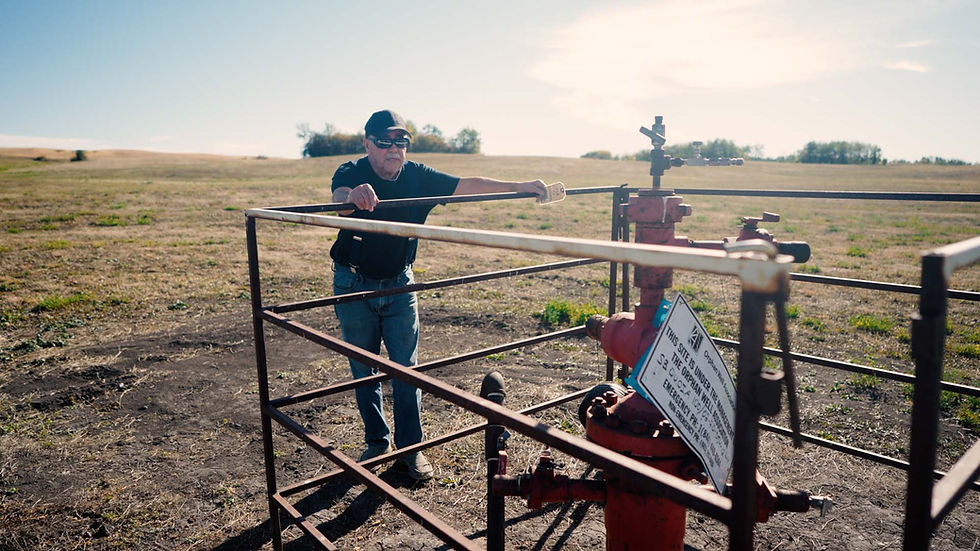
Farmer Dwight Popowich has had an inactive gas well in the middle of an alfalfa field on his rural property in Two Hills, Alta., for 14 years. The Alberta Energy Regulator told Popowich that it could take another decade for that well to be restored to its natural state.
He’s made common cause with other landowners in a similar predicament across the province. Under the banner of the Polluter Pay Federation, they have banded together to demand that the oil and gas industry clean up its mess.
But the provincial government’s latest scheme to reduce the 77,869 inactive wells across Alberta that haven’t produced fossil fuels for at least six months, has Popowich convinced that the deck is stacked against rural landowners and in favour of oil and gas interests.
“The whole process was actually a sham and was designed to come to a predetermined outcome,” he told Canada’s National Observer.
The province’s far-reaching Mature Asset Strategy (MAS), which aims to increase the value of natural gas and stimulate the cleanup of inactive wells, hasn’t pleased landowners or industry, documents obtained through access to information reveal.
May 29, 2026
News Coverage
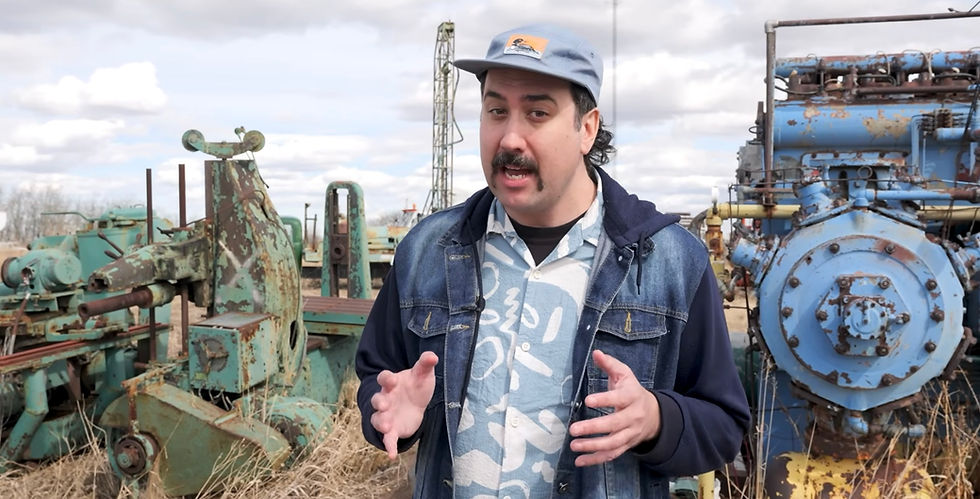
Alberta is sitting on a $320 billion time bomb. The oil and gas industry built it. And if nobody fixes it, you're paying the bill. Whether you live in Alberta or not. Good thing the government hired an industry insider to defuse it! In this video, we break down how Canada's richest province got conned - slowly, boringly, and in plain sight.
May 18, 2026
News Coverage

Driving across her sprawling farmland near the hamlet of Shouldice, southeast of Calgary, Kelly Nelson points out active oil wells, aging infrastructure and one rusted site that has sat abandoned for nearly a decade.
Nelson explains the well no longer produces oil and the company that once operated it is gone. Yet the site has still not been formally designated an orphan well by Alberta’s Orphan Well Association.
“It is just a spot that nobody looks after,” Nelson said. “Nobody owns it. Nobody claims it.”
Nelson said she now plans to contact the Orphan Well Association in hopes the site can formally enter the orphan well system and eventually be cleaned up.
The site includes a rusting storage tank and inactive pipelines cutting through land Nelson still farms around.
“We’d like to be able to farm through it,” she said.
Nelson’s frustrations come as Alberta faces mounting concerns over its growing inventory of inactive, aging and orphan oil and gas infrastructure following the collapse of Calgary-based Long Run Exploration.
The Orphan Well Association announced in April it had taken over more than 4,000 inactive wells and related sites from Long Run after the company entered receivership last year. Before the transfer, the association already had roughly 4,200 orphan wells and sites in its inventory.
The surge has intensified debate over who will ultimately pay to clean up Alberta’s aging oil and gas infrastructure.
Alberta’s orphan well system
Alberta’s orphan well system is primarily funded through an annual industry levy collected by the Alberta Energy Regulator from oil and gas companies operating in the province. The money is transferred to the Orphan Well Association to help decommission and reclaim abandoned sites.
The Alberta Energy Regulator set the levy for the 2026-27 fiscal year at roughly $154.6 million, up from about $144.5 million the previous year.
At the same time, the regulator estimates Alberta’s total oil and gas cleanup liabilities — including active and inactive sites — reached $36.6 billion in 2024.
Shaun Fluker, a University of Calgary law professor specializing in natural resources law, said the province’s orphan well system was never designed to absorb this scale of liabilities.
“The intentions back in the day were that these would be exceptions to the norm and that industry would always be there to look after its sites and clean them up when their economic life had ended,” Fluker said.
Instead, he argues Alberta’s regulatory framework allowed inactive and marginally producing wells to accumulate for decades without adequate financial safeguards.
“It’s regulatory failures is how we ended up here,” he said.
Fluker said Alberta regulators historically failed to require sufficient security deposits from companies to guarantee future cleanup costs and never imposed firm timelines for decommissioning aging infrastructure.
“Because of those deficiencies, there was a huge buildup in inactive and marginally producing sites in Alberta,” he said.
“We’re talking hundreds of thousands of wells.”
He called the issue “potentially the most significant public policy crisis facing Alberta,” and has been calling for a public inquiry into the province’s growing inactive and orphan well inventory for years.
“I don’t see us finding a viable solution to this problem without a true and full public inquiry,” Fluker said.
Apr 25, 2026
News Coverage
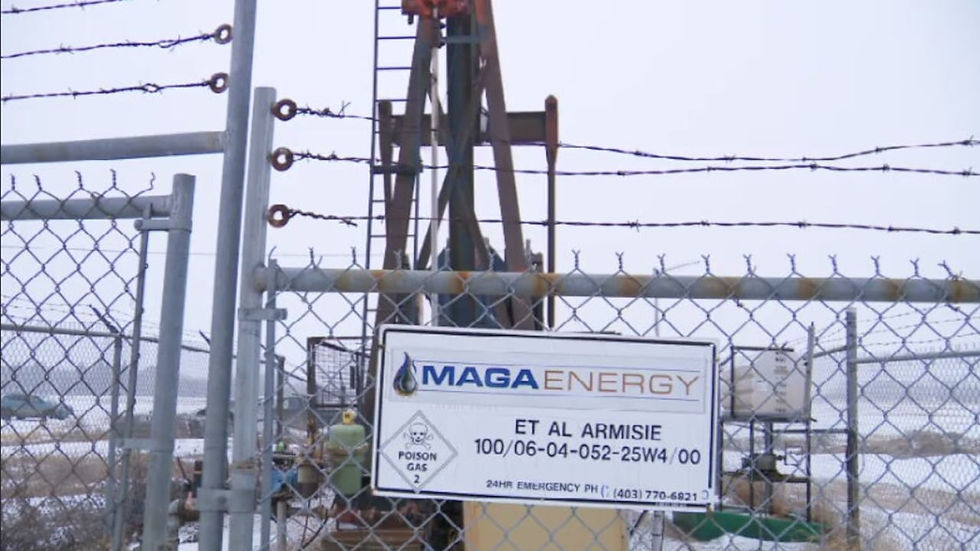
By Emma Zhao, CBC News
The Alberta Energy Regulator (AER) has ordered oil and gas firm MAGA Energy Ltd. to suspend its operations over unresolved environmental concerns and non-compliance issues, including unpaid taxes and orphan well cleanup fees.
The AER announced Thursday that it had issued the order a day earlier. The Calgary-based company has two weeks to shut in its wells and turn off equipment at its facilities, and to discontinue use of active, remaining pipelines, according to the order issued by the agency.
MAGA Energy currently holds 581 wells, 108 facilities and 801 pipeline segments, the AER said.
In a news release, the AER said it was taking action “to protect the public and environment.”
“Based on MAGA’s unpaid municipal taxes, AER and Orphan Well Association debt, and failure to meet its commitments, the director assessed that the licensee does not have the capacity to fulfil its regulatory and liability obligations,” the AER said.
The order includes a list of requirements that MAGA must address before it can resume operations. These include addressing remediation issues for multiple sites, resolving outstanding field inspections and spending the minimum, legally required amount of money for cleanup of inactive sites.
In a statement to CBC News on Friday, Sturgeon County said MAGA Energy owes an outstanding balance exceeding $356,000 in property taxes and penalties. The county warned that if the company dissolves, the chances of recovering those funds are uncertain.
“It is unacceptable for companies to walk away from their tax obligations,” the statement read, adding that municipalities need stronger enforcement tools to ensure property taxes are treated as a priority.
According to the statement, as of Dec. 31, 2025, oil and gas companies owed Sturgeon County more than $6.8 million in unpaid property taxes.
A post on Sturgeon County’s website from 2023 details how county officials said MAGA Energy owed more than $230,000 in tax arrears at that time, dating back to 2021.
In 2023, a ministerial order, signed by Alberta’s then-energy minister Peter Guthrie, was meant to prevent the AER from approving the transfer of any more wells or well licences to companies that had municipal tax arrears beyond a certain threshold.
In September 2024, the AER approved the transfer of 170 wells, 30 facilities and 47 pipeline licences to MAGA Energy.
Mark Dorin owns land in and around Edmonton with wells that were transferred to MAGA Energy over the past few years. He believes the regulator should be acting faster.
“We’ve got this company that's not paying their taxes, not paying landowners,” he told CBC News. “There's no public benefit whatsoever for those operations.
“We've got our priorities backward.”
MAGA Energy had not responded to CBC’s request for comment at the time of publication.
Mar 12, 2026
News Coverage
By Jack Farrell, Canadian Press.
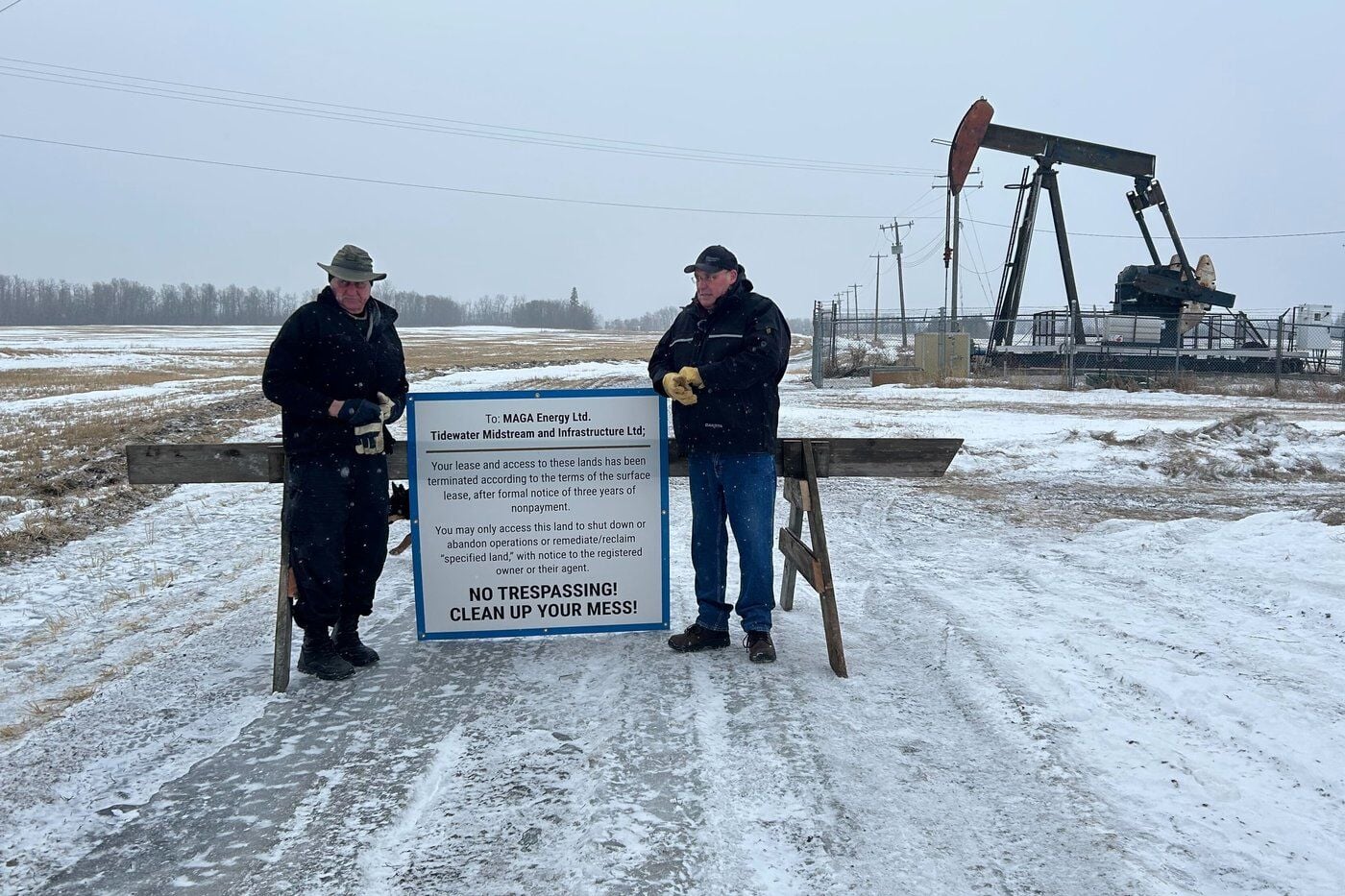
EDMONTON - Some Edmonton landowners are taking a stand by erecting a blockade against what they call a delinquent oil and gas company.
The group says MAGA Energy hasn't paid its lease for three years, and therefore the company is no longer allowed on their land.
On Thursday, landowners Mark Dorin and Dale Braun put up a wooden barrier on their piece of farmland in southwest Edmonton, where MAGA Energy operates pumpjacks.
"If I'm a land owner and I don't pay my bills, I lose my land, I lose my house," Dorin told reporters in front of one of the company's active wells.
"But look behind me, we've got (an) active pumpjack here ... more pumpjacks over there on our land, all operating and they haven't paid their bill."
Braun, who along with his family own a 75 per cent stake in the land, said he's not anti-oil and gas and that he believes Premier Danielle Smith's government is on the right path when it comes to the industry. But he said he just wants the company to "grow up."
"The laws have been broken here. They're being broken on a daily basis and it's being ignored," Braun said.
Dorin said that now that the group has terminated the lease over the missing payments, MAGA Energy isn't allowed on the land unless its employees are there to decommission the wells.
"That's the law of Alberta and we're going to enforce it here," he said.
He added that the company usually has staff on site at least once a day.
MAGA Energy did not immediately respond to a request for comment.
[...]
Feb 3, 2026
News Coverage
By Phillip Meintzer, Coalition for Responsible Energy (C4RE) Published February 4, 2026 Read the original post at Drill and Dash Report
(Alberta) - A new piece by the Investigative Journalism Foundation reveals that numerous Alberta oil and gas companies were granted well licenses by the Alberta Energy Regulator (AER) despite owing thousands in municipal taxes. These licences circumvented a March 2023 ministerial order authorizing the AER to block companies that were delinquent on taxes from acquiring new wells.
The AER regulations were intended to block the transfer of new well licences to companies that owed more than $20,000 in unpaid municipal taxes. According to the IJF investigation: “There were 130 companies exceeding that threshold in 2024 … twenty-one of these companies … were given new well licences.”
A few highlights of the IJF’s reporting on companies skirting the rules:
In 2023, the AER approved the transfer of 407 well licenses to Blue Sky Resources, a company that now owes over $3 million in unpaid taxes across 15 municipalities;
MAGA Energy Ltd. acquired 191 new well licences in 2024 and 2025, while their tax arrears doubled from $616,541 in 2021 to more than $1.2 million in 2024;
Battle River Energy’s total tax arrears increased from $208,316 in 2021 to $602,316 in 2024. The AER approved the transfer of five wells to the company in October 2023.
As of the end of 2024, rural municipalities were cumulatively owed $254 million in unpaid taxes by oil and gas companies, up from $81 million in 2018. Kara Westerlund, president of the Rural Municipalities of Alberta (RMA) is quoted in the IJF report:
“The question that we’re asking is, how did this happen? Why are you allowing it? And what are you doing to stop it? And those questions still remain unanswered up to this date.”
Dec 1, 2025
News Coverage
Published December 1, 2025 Read the original article at The Narwhal
When Alberta oil and gas companies stop paying their bills, rural communities absorb the costs. Drew Anderson’s explainer breaks down the numbers: $254 million in unpaid municipal taxes, $150 million paid by government to landowners (with less than 1% recovered from delinquent companies), and cleanup liabilities ranging from $100 billion to $260 billion.
The pattern is consistent across all three crisis areas. Companies default on surface lease payments to landowners, who then petition the Land and Property Rights Tribunal for government reimbursement. Municipalities write off $200 million in uncollectible property taxes and raise rates on residents to compensate. And regulators collect security deposits representing just 0.3% to 10% of environmental liabilities — percentages that reveal a system designed to enable corporate abandonment.
Read Drew Anderson’s full explainer at The Narwhal → for the complete breakdown of surface lease mechanics, government reimbursement processes, municipal enforcement gaps, and cleanup cost estimates.
Nov 20, 2025
News Coverage

By Paul Cowley, Red Deer Advocate
Albertans overwhelmingly say oil and gas companies should pay their bills, says a new poll.
A recent poll by Janet Brown Opinion Research found 92 per cent of Albertans say oil and gas companies should be responsible for final cleanup of their wells.
Eighty-seven per cent said energy industry players should pay the taxes they owe municipalities and 84 per cent support the government getting tough on companies and making them pay unpaid rents to landowners.
“Albertans don’t agree on a lot these days,” said pollster Janet Brown, “but our research shows they overwhelmingly want the oil and gas industry to pay their bills.”
The poll was released just as representatives from 69 municipal districts and counties met in Edmonton at Rural Municipalities of Alberta’s (RMA) fall convention that wrapped on Thursday.
RMA has been pressing the Alberta government for years to crack the whip and force oil and gas companies to pay what they owe to municipalities in property taxes. Annual surveys have highlighted the extent of the problem, with the most recent showing rural municipalities are owed $254 million in back taxes.
Nov 20, 2025
Press Release
“Albertans don’t agree on a lot these days,” says pollster Janet Brown, “but our research shows they overwhelmingly want the oil and gas industry to pay their bills.”
(Edmonton, AB) – New Alberta polling shows an overwhelming public consensus that oil and gas companies should pay to clean-up their wells, and super-majority support for the government holding industry – as a whole – accountable for companies’ unpaid property taxes to municipalities, and unpaid rents to landowners. Highlights include:
92% support oil and gas companies being responsible for the final clean-up of wells
87% support the government requiring industry to cover unpaid property taxes to municipalities
84% support the government requiring industry to cover unpaid rents to landowners
The research was released as the Rural Municipalities of Alberta (RMA) gathers for their fall convention in Edmonton this week. The RMA’s most recent data show rural communities are owed over $250 million in unpaid taxes from oil and gas companies – with the number rising every year. “Rural Albertans are paying the price for these unpaid oil and gas taxes, through service cuts and increased costs,” says Ponoka County Reeve Paul McLauchlin. “This polling tells me they’ve had enough, and it’s a full rejection of the government’s inaction to date on this topic.”
This new polling comes in the midst of rising public outrage over the provincial government’s Mature Asset Strategy (MAS), a plan that will weaken industry accountability for oilfield cleanup, water down reclamation standards, and push even more costs onto the Alberta taxpayer.
“This matches what we’ve been hearing at Clean Up Your Mess town halls across the province: that industry is making record profits, and they must pay what they owe now – not just for well cleanup, but for the unpaid bills left behind by operators who have dined and dashed on their commitments to landowners and municipalities.” says Phillip Meintzer, campaign organizer with the Coalition for Responsible Energy (C4RE).
One of those people is Dale Braun, a landowner from Edmonton with three wells on his property owned by MAGA Energy, an operational oil and gas company that has not paid annual compensation for the loss of the use of his land for the last two years; the company now owes Braun around $24,000. “Like most Albertans, I pay my taxes. I pay my bills. I clean up my own damn mess. It’s the law. Why should they have a different set of rules?”
“Landowners’ frustration with industry is reaching a boiling point,” says Alberta Surface Rights Federation President Bill Heidecker. “Unless these issues are addressed, there can be no consideration of increased production, no new pipelines, or carbon capture and storage. It makes no sense.”
The polling was conducted by trusted industry leader Janet Brown Opinion Research, an Alberta-based company specializing in public opinion polling and market research.
Brown highlighted that even though the unpaid property taxes and landowner compensation largely impact rural communities, it’s noteworthy that support for industry accountability is consistently high across the province: “These findings show that these aren’t just rural concerns. People across Alberta agree that industry should be held responsible for these costs.”
- 30 -
BACKGROUND:
Across Alberta, there are more than 300,000 wells, 450,000 kilometres of pipeline, and around 40,000 facilities that have yet to be cleaned up after nearly a century of energy development, with cleanup costs estimated to be between $60 billion and $130 billion.
At the same time, oil and gas companies are increasingly reneging on their municipal tax bills: the Rural Municipalities of Alberta says rural communities are owed $254 million in unpaid taxes from oil and gas companies, many of them still solvent. This is leading to municipalities cutting services, or raising taxes on everyone else to make up the difference.
MAGA Energy is one of many companies refusing to pay their annual compensation (or rent) to landowners. Landowners are entitled to seek compensation from the Alberta government when companies renege on payments, which means taxpayers ultimately foot the bill. Since 2010, Alberta taxpayers have covered nearly $150 million in unpaid rent to landowners – $30 million in 2024 alone.
MEDIA CONTACT:
Phillip Meintzer, co-founder, Coalition for Responsible Energy (C4RE) Phillip@ResponsibleEnergyAB.ca, (403) 771-1647
Oct 14, 2025
News Coverage

A consortium of advocate groups is renewing calls to scrap the Alberta government’s proposed plans for dealing with aging oil and gas infrastructure, but the province is moving ahead.
The Coalition for Responsible Energy (C4RE), which is composed of more than 15 land rights, surface rights, environmental, health, science, Indigenous and civil advocate groups, has been campaigning across Alberta over the past several months.
The current core issue for C4RE is the government of Alberta’s mature asset strategy, a plan to deal with the inventory of aging oil and gas infrastructure and the issues surrounding it.
“We would like to see the mature asset strategy scrapped," campaign organizer Phillip Meintzer said.
“I just think you need to go back to the drawing board with meaningful and open public consultation.”
The strategy was a focal point in a recent mandate letter from Premier Danielle Smith to Energy Minister Brian Jean and is informed by a report of 21 recommendations published by the province in April.
The energy and minerals ministry told CBC in an emailed response to questions that it is moving forward with 20 of the 21 recommendations, but didn’t say which one is not being adopted.
After the draft version of the report was leaked, the final version had some reworded sections, including the suggestion that the province should manage a new insurance fund as opposed to backstopping liabilities with taxpayer dollars.
Sep 15, 2025
News Coverage
By Drew Anderson, The Narwhal.
If Vitor Marciano, the chief of staff to Alberta’s energy minister, thought he was going to get a warm reception at a recent meeting in the village of Warburg, he was mistaken.
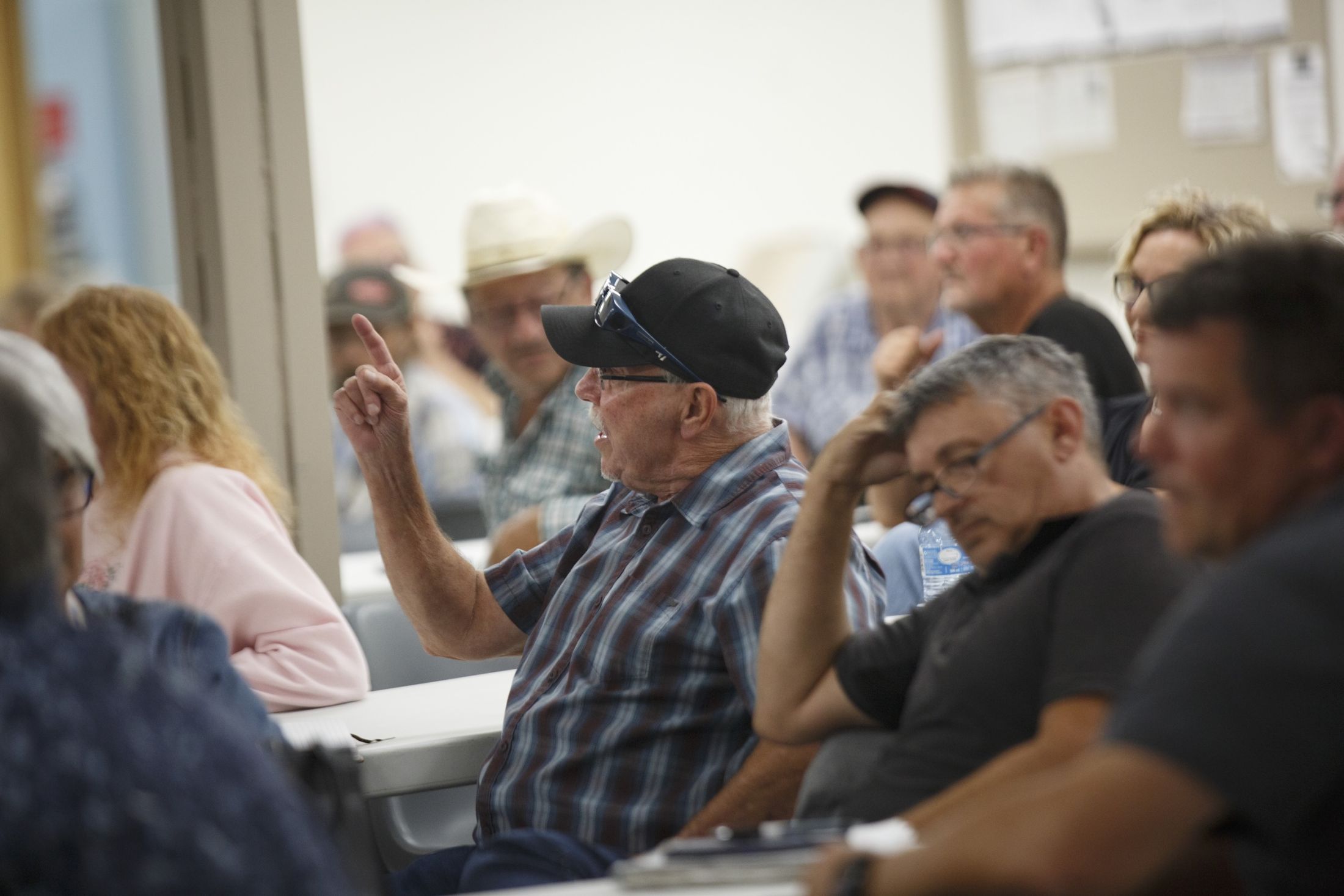
Marciano faced jeers and doubt as he tried to sell a largely rural crowd on the government’s latest plan to deal with a cascade of problems caused by the oil and gas sector.
Around 100 people were in the Warburg Community Hall on Sept. 9 to hear Marciano talk about the Mature Asset Strategy. It’s a series of recommendations the government says will help with the oil and gas industry’s unpaid taxes and leases, which include tens of thousands of inactive wells and environmental liabilities of almost $38 billion, according to the Alberta Energy Regulator.
He was joined, unexpectedly, by the author of that strategy, Dave Yager, a board member of the regulator and a special advisor to Premier Danielle Smith. Yager was not advertised as a guest.
“The mature asset strategy will not give companies taxpayer dollars to clean up their assets,” Marciano said, summarizing his message to the crowd.
“It will,” came a voice from the back of the room.
“The mature asset strategy will not end or diminish the Orphan Well Association,” Marciano said, referring to the industry-funded association meant to deal with wells left behind by bankrupt companies.
“It will,” came the same voice.
“The mature asset strategy does not violate the polluter-pay principle,” Marciano continued.
“It will,” came the reply.
That disagreement set the stage for the night, though it was one of the quieter exchanges, with the crowd often interrupting and arguing with Marciano.
Jul 22, 2025
News Coverage

By Natasha Bulowski, National Observer.
An Alberta landowner dealing with an orphan gas well on his property wants an investigation into an oil industry insider and advisor to Premier Danielle Smith. David Yager led the creation of a controversial strategy that would shift the burdens of oil and gas well clean up from industry to the public, while also advertising his services as an industry consultant.
Yager is a long-time oil and gas industry insider who has worked as an executive for a handful of oilfield companies, including Tesco Corporation, which he founded. Yager’s business website offers consulting services for the oil and gas service industry. At the same time, he is sitting on the board of the Alberta Energy Regulator and acting as a “special advisor” to Premier Danielle Smith.
The complaint, filed to the Ethics Commissioner by Ecojustice on July 22, alleges Yager’s role in the creation of the controversial Mature Asset Strategy violated the Conflict of Interest Act.
“He can't have all those roles at the same time,” Susanne Calabrese, staff lawyer at Ecojustice, said in a phone interview with Canada’s National Observer.
“In our opinion, it's impossible to represent the interests of a part of the government, an independent regulator, private companies and then the public, all at the same time.”
Reached by phone, Yager declined to comment on the complaint.
Canada’s National Observer received two unattributed, emailed statements from the Office of the Minister of Energy and Minerals defending Yager’s appointment.
“Mr. Yager has been contracted to work with the Government of Alberta based on the unique skills and experience he brings from a long career in the oil and gas sector, as well as the valuable perspective he brings to significant issues relating to the energy sector,” the statement read.
“Mr. Yager has not had any clients in the oil and gas industry since he signed a contract with Energy and Minerals in 2023. The website referenced in the letter is simply outdated.”
The statement said Yager is compliant with the conflict of interest rules and his contract was reviewed by the department’s contract review committee which "confirmed that there would not be a conflict of interest related to his contributions to the Mature Asset Strategy or the advice he would be providing.”
The statements also referenced his over 50 years of experience in upstream oil and gas and time as founder, executive officer and director of three publicly traded oilfield service companies “specializing in wellbore construction, completion, remediation, abandonment, production optimization, regulatory compliance and the physical protection of workers, assets and the community.”
Apr 20, 2025
Event

If you drill it, you clean it up. That was the deal between the provincial government and oil and gas corporations.
But in a few weeks, the Alberta government is planning to break the deal and let corporations walk away from clean up, and stick taxpayers with the bill.
It’s not too late to stop it, but only if we send a strong message. Come to the townhall and find out how you can get involved.
Date: Apr 29, 2026 (Wednesday)
Time: 7pm – 8:30pm
Location: Inspire (805 Main Street Southwest Airdrie, Alberta Canada)
Apr 14, 2025
Event

Join us for a discussion with your neighbors about the health, safety and costs of unreclaimed oil & gas wells in the Provost area.
Landowners across Alberta are being forced to deal with unpaid rents, weed issues, health impacts, cleanup delays, and negligent operators.
Rural municipalities are also facing revenue shortages from unpaid property taxes.
Despite strong corporate profits, the oil and gas industry isn’t setting aside money for the cleanup of 300,000 unreclaimed wells across the province.
As tax-paying Albertans and as landowners, we cannot let the industry leave us with the clean-up bill.
We need to stop this corporate giveaway and stop the Alberta government’s Mature Asset Strategy proposal!
Come speak with your neighbours about what’s happening in your community, and how we can take action together to stop it.
Location: 5113 43 Street, Provost, AB T0B 3S0
6:30 - 7:00pm Snacks and Refreshments
7:00 - 8:30pm Presentations and Discussions
8:30 - 9:00pm Free discussion and Mingling
Reserve your spot here: https://www.eventbrite.ca/e/provost-town-hall-meeting-trouble-with-oil-gas-wells-on-your-land-tickets-1986776570204
Apr 4, 2025
News Coverage

By Cindy Tran, Edmonton Journal.
The Rural Municipalities of Alberta says the new government-commissioned report on what to do about the long-standing issue of inactive oil and gas wells does nothing to address concerns it has brought to the table.
RMA president Kara Westerlund said none of the 21 recommendations put forward in the report released on Thursday addressed the association’s concerns related to the lack of a clear definition of “mature assets” and “unsupported” property tax estimates.
She said it was clear that despite municipalities sitting at the table, “the resounding voice was industry.”
“There were so many concerns with this,” Westerlund said.
“There’s still concerns with the recommendations and I want to be very clear — we have been very open with the government about the process and about the concerns that we’ve had from the get-go, and it just felt like it was they weren’t being addressed.”
New insurance fund
David Yager, a special adviser to Premier Danielle Smith and a Alberta Energy Regulator board member, authored the report.
One of the recommendations he put forward would create a new insurance fund with contributions from industry licensees to cover liabilities related to closed wells. A draft report leaked to the media, said the fund would be at the cost of taxpayers, but the language has since changed to say it would be “managed” by province.
There are nearly 80,000 inactive wells scattered across Alberta, with majority situated in rural municipalities.[...]
Read the full article at the Edmonton Journal
Mar 17, 2025

Alberta wants to accelerate cleanup of oil and gas wells with taxpayers as backstop, document shows | The Globe and Mail
By Jeffrey Jones, Globe & Mail
An Alberta government panel is proposing a series of actions to deal with the massive cleanup bill for aging and uneconomic oil and gas wells, some of which would see taxpayers backstop activities that the industry has long been responsible for, a leaked document shows.
The recommendations include establishing special-purpose companies to acquire mature wells, produce the remaining hydrocarbons and use the cash flow to fund cleanup, and also setting up an insurance fund financed by the industry but guaranteed by taxpayers.
The options, and numerous others, are detailed in a draft report of a process to create what the province calls a “mature asset strategy” to deal with a massive backlog of wells that remain on the books of producing companies but are no longer profitable. A copy of the confidential report, dated Jan. 28, was obtained by The Globe and Mail.
Today, companies are legally required to plug spent wells and reclaim the land. But ballooning underfunded cleanup liabilities have fuelled significant friction between the industry, government and rural municipalities, which say they are owed $253.9-million in unpaid taxes from energy companies.
When companies go bankrupt, their wells can be transferred to the Orphan Well Association, an industry-funded group tasked with cleaning them up. The OWA has received millions of dollars in loans from the Alberta and federal government in recent years to shore up its operations.

Albertans clean up after themselves.
So should oil and gas.
Join thousands of Albertans who are fed up, and taking action to stop the oil and gas industry from dining on profits – then dashing on their cleanup bills.